Nov 6, 2026 | In Blog
Who Owns the Music?
Copyright, Contracts and Ghana’s Music Industry
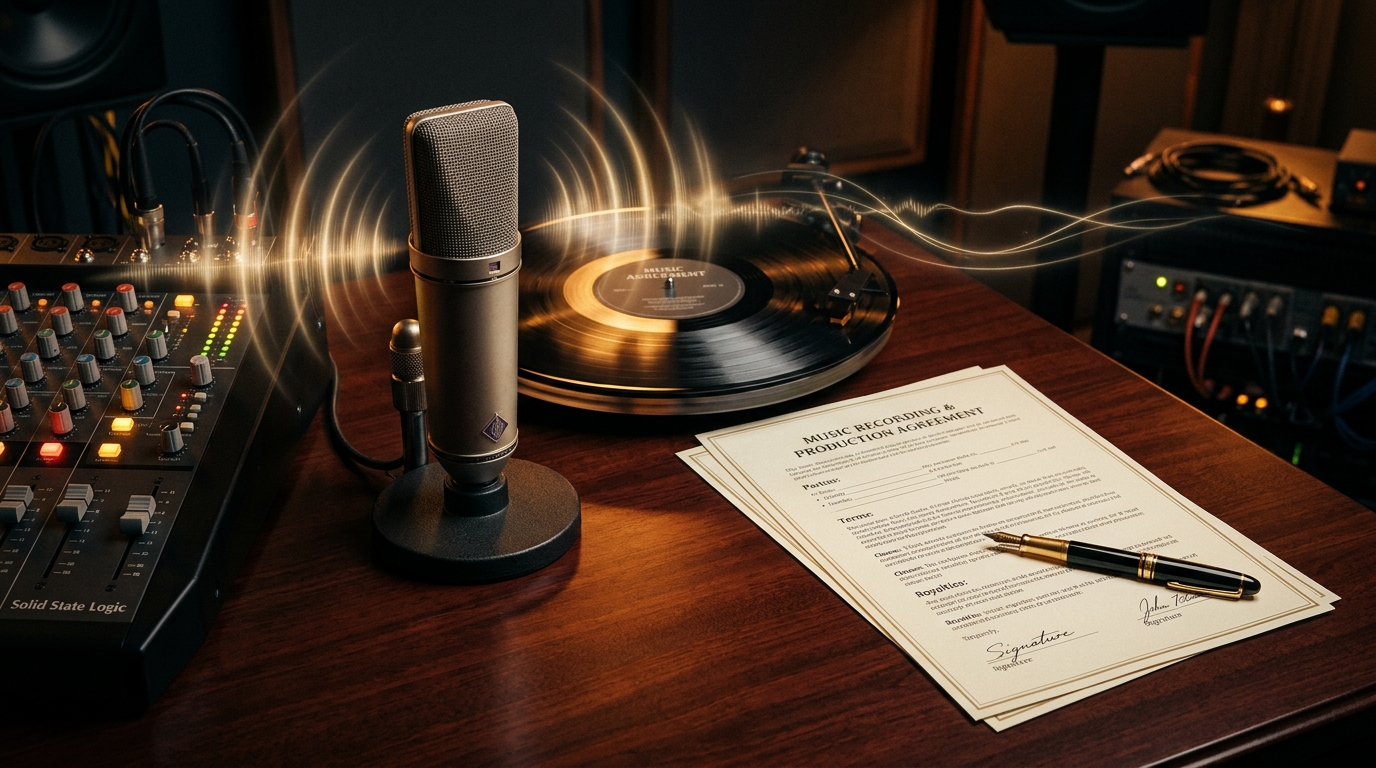
Imagine building a career around your music, your image and your identity as an artist, only to find yourself in a dispute over who has the right to use them.
The public dispute between Ghanaian musician Kwesi Arthur and his former label, Ground Up Chale, highlights this issue. In January 2026, Kwesi Arthur publicly raised concerns about the label’s claims over his music and image, among other issues. Ground Up Chale and its founder, Glen Boateng, later filed a defamation suit over statements he made on social media. Although both sides’ positions have been reported publicly, the reports do not show that a court has decided who owns the music and other creative material in dispute.
The dispute raises an important question for Ghana’s music industry: when musicians work with record labels, managers and producers, who has the right to control and use the music and other material they create?
Creating a song, performing it and owning the rights to its recording do not necessarily mean the same thing. Under Ghanaian law, the answer depends on the type of work, the rights involved and the terms of any relevant contract.
Who Actually Owns the Music? The Rights Involved
When an artist releases a hit song, who owns it? The singer, the songwriter, the producer or the record label? The answer may involve more than one person.
Ghana’s Copyright Act, 2005 (Act 690), protects different types of creative work, including musical works, sound recordings and audiovisual works. A single music release can therefore involve several different rights:
- Musical work: The song itself, including the melody and lyrics.
- Sound recording: The recorded version of a performance, commonly called the master recording in the music industry.
- Audiovisual work: A music video or other production combining moving images with or without sound.
- Performance: The singer’s or musician’s actual performance, which is also protected under the Act.
These distinctions matter because owning the rights to one part of a music release does not automatically mean owning the others. A songwriter may have rights to the song itself without owning the master recording or its music video. Similarly, a performer’s rights do not automatically mean they own every work or recording in which the performance appears.
Sections 5 and 6 of Act 690 distinguish between economic rights and moral rights. Economic rights cover ways a work can be used commercially, such as copying, distributing or publicly performing it. Moral rights include an author’s right to be identified as the creator and to object to certain changes that could harm their reputation.
Ownership can become more complicated where artists work with record labels or producers. Section 7 of Ghana’s Copyright Act, 2005 (Act 690), states that, unless the parties agree otherwise in a contract, the economic rights in a work created as part of someone’s employment or under a commission, belong to the employer or the person who commissioned the work.
This means that a label or producer who commissions a work may hold its economic rights unless the parties agree otherwise. However, this does not mean that a record label automatically owns everything an artist creates while signed to it. The work must have been created as part of the employment or commission, and any agreement between the parties must also be considered.
Contracts, Assignments and Licences: What Did the Artist Actually Sign?
A record deal can open doors for an artist, providing funding, production support, promotion and access to a wider audience. But what rights has the artist agreed to transfer, and what rights have they merely allowed someone else to use?
Section 9 of Act 690 allows economic rights to be transferred in whole or in part. An assignment must be in writing and signed by the copyright owner or someone authorised to act for them. A licence, however, may be given orally, in writing or inferred from the way the parties behave. The Act also distinguishes economic rights, which can be transferred, from the moral rights protected under section 6.
An assignment can transfer specified economic rights, while a licence generally gives permission to use a work in particular ways. The effect depends on which rights are covered and what the parties have agreed. A label’s involvement in producing or promoting a song does not, by itself, tell us whether the rights have been transferred or the label has simply been given permission to use the work.
Artists and labels should therefore be clear about what their agreement covers. It should identify the works and rights involved, explain how the work may be used and state any restrictions. It should also specify whether the arrangement covers the song itself, the master recording, music videos or a combination of these.
The Small Print Can Make a Big Difference
For artists negotiating recording, production or management agreements, the details matter. The rights an artist gives up, how long those rights last, how royalties are calculated and paid, and what happens when the agreement ends can all affect whether the artist can release music independently, allow their work to be used in advertising or work with another label.
The importance of how long rights last can be seen in the case of Bright Onyina v Kwarteng @ Wakedi (2018). The dispute concerned rights in several musical works, including “Psalm 23” and “Montintim”. Bright Onyina relied on written agreements that allowed him to reproduce specified works on audio cassettes and CDs for two years. Those agreements had expired before he brought his case to court.
The High Court found that the agreements were valid, but Onyina could not obtain the court declaration of copyright ownership he sought because the rights he relied on had expired. The court also rejected the defendant’s claim that he personally owned the late Anthony Owusu Ansah’s musical works simply because he was the customary successor. Both parties’ claims were dismissed.
The case shows why parties need to understand not only what rights an agreement gives them, but also which rights are covered and how long those rights last. An agreement allowing someone to reproduce specific works for a limited period should not be treated as permission to use those works in any way for as long as they wish.
Permission, Ownership and the Fine Print
Copyright disputes are not always about who wrote a song. Sometimes, the question is whether someone had permission to use it. In other cases, the dispute is about which rights were transferred and whether those rights were still valid.
When a Hit Becomes an Advertisement
In Rex Owusu Marfo v Joy Industries Ltd (2021), musician Rex Owusu Marfo challenged the use of part of his song “Da Da Di Da” in an advertisement for Joy Dadi Bitters. Joy Industries denied that it had copied his work, arguing that the advertisement used syllables taken from its product name.
The Court of Appeal agreed that the advertisement had reproduced and imitated part of the protected song. In reaching its decision, the court considered the similarities between the song and the advertisement, including the tune, melody and arrangement. Changing the lyrics did not prevent the use from being found unlawful in the circumstances. The court also kept the order stopping the unauthorized use in place and confirmed the award of GH₵200,000 in general damages.
The case shows that changing lyrics or using only part of a song does not necessarily avoid copyright infringement. If the evidence shows that protected parts of the song were used without permission and that the works were sufficiently similar, the use may still infringe copyright. Businesses that want to use music in advertisements should therefore check which rights are involved and obtain the necessary permission, rather than assume that changing a few words makes the use lawful.
Neither case decides the ownership questions in the ongoing Kwesi Arthur dispute, but both offer useful guidance on issues that can arise when music is used in commercial relationships.
Practical Lessons for Artists and Labels
For artists and record labels, the best time to discuss who owns and controls music is before a dispute arises. A well-written agreement should do more than explain how revenue will be shared. It should state which rights are being given, who can use them and under what conditions.
In practice, several issues deserve particular attention:
- Ownership and licensing: State who owns the song itself, the sound recording and any music video or other audiovisual material. Make clear whether rights are being transferred or whether permission is only being given to use the material for specific purposes.
- Royalties and accounting: Agree on how royalties and other income will be calculated, when payments must be made and what information the artist can access to check that the amounts paid are correct.
- Duration and termination: State how long the arrangement lasts, whether it can be renewed and what happens to the rights when the agreement ends. Ending an agreement does not necessarily mean that all rights immediately return to the artist. This depends on the agreement and the applicable law.
- Use of recordings and audiovisual material: Make clear who can distribute, license, or copy recordings and music videos, and who can use them in advertising, promotional campaigns and other commercial projects.
- Image and identity: Clearly state whether permission is given to use an artist’s name, image, likeness and other aspects of their identity. The agreement should explain what the permission covers, how long it lasts and any limits on its use.
These are not just technical details. They can determine whether an artist can release new music independently, whether a label can continue using and earning income from music already in its catalogue, and how either party can use material created during their working relationship.
Clear contractual terms cannot prevent every disagreement, but they can help both parties understand their rights and protect their interests.
Conclusion: Know What You Create, and What You Sign
In the music industry, creating a song, performing it and controlling the rights to it are related, but they are not the same thing. Ghana’s Copyright Act, 2005 (Act 690), protects creative works and performances, but who owns or can use particular rights may also depend on the agreements between the parties.
The outcome of the Kwesi Arthur and Ground Up Chale dispute should not be assumed from public allegations or reports about the separate defamation case. The legal position in any dispute depends on the works involved, the rights in question, the applicable law and the available evidence.
For artists, understanding a contract is part of protecting the value of their creative work. For labels and producers, clearly stating which rights they own or have permission to use helps protect their business interests. Before a dispute arises, both sides should be able to answer some basic questions: what was created, who owns the relevant rights, what permission was given and how long does it last?
Knowing your rights begins with understanding both what you create and what you agree to sign away.
This article is for general information only and does not constitute legal advice. For advice regarding a specific legal matter, please contact Corporate and Allied Attorneys.
Source List
- Copyright Act, 2005 (Act 690) (Ghana):
https://repository.parliament.gh/server/api/core/bitstreams/4b7ed217-30e6-49bd-80ad-21e081c357cc/content - Copyright Act, 2005 (Act 690) (Ghana), ss 5-6.
- Copyright Act, 2005 (Act 690) (Ghana), s 7.
- Copyright Act, 2005 (Act 690) (Ghana), s 9.
- Bright Onyina v Mr Kwarteng @ Wakedi [2018] DLHC 3719 (High Court, 13 April 2018):
https://nooktoria.com/case-law/bright-onyina-vs-mr-kwarteng-wakedi/ - Rex Owusu Marfo v Joy Industries Ltd [2021] DLCA 10811 (Court of Appeal, 17 June 2021):
https://superlawgh.com/judgements/rex-owusu-marfo-v-joy-industries-ltd-hi-34-2020/ - Kwame Dadzie, ‘Ground Up Chale sues Kwesi Arthur over online accusations, seeks more than GH₵10 million in damages’, MyJoyOnline (28 January 2026):
https://www.myjoyonline.com/ground-up-chale-sues-kwesi-arthur-over-online-accusations-seeks-more-than-gh%E2%82%B510-million-in-damages/